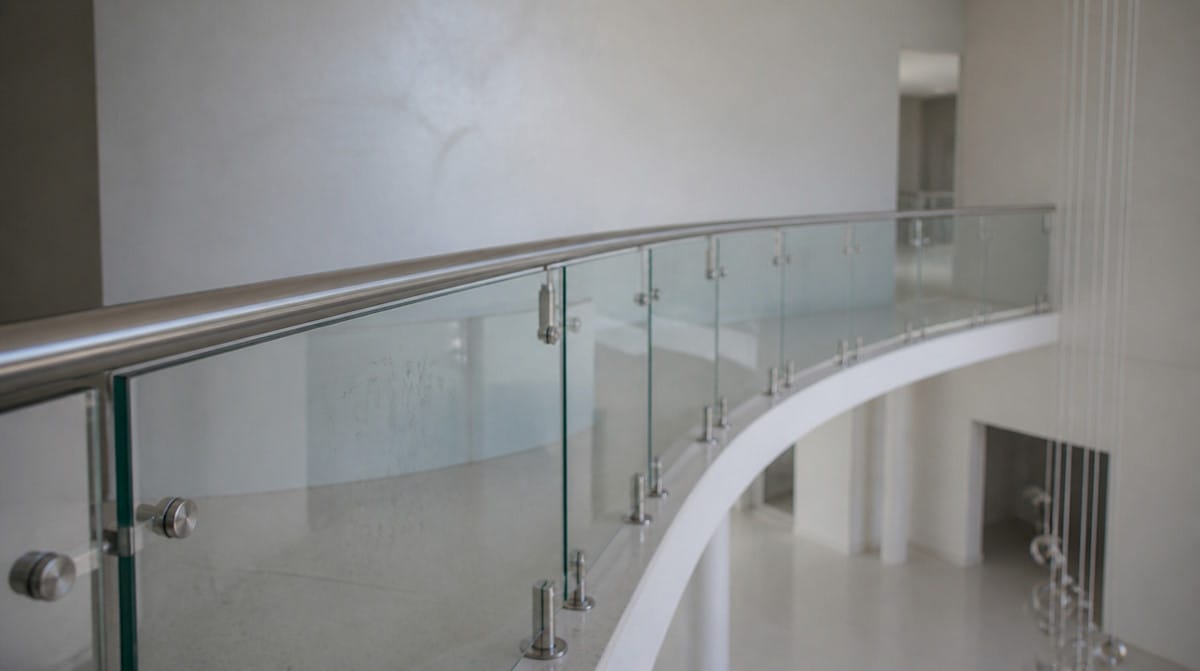
Florida Glass Railing Code: Height, Gaps, Load & HVHZ Requirements (2026)
A glass railing can look effortless and still be the only thing between someone and a serious fall — which is exactly why Florida doesn’t leave it to taste. Before a balcony, staircase, or poolside glass railing passes inspection in South Florida, it has to hit specific numbers for height, gap size, structural load, and glass type — and along the coast, wind load and product approvals on top of that. Here’s what the Florida Building Code actually requires in 2026, in plain English, so you know what a compliant railing looks like before you pay for one.
Guards, Handrails & Pool Barriers Are Three Different Things
Most code confusion comes from treating “railing” as one thing. The code sees three, each with its own rules:
- Guard — the barrier that stops a fall from an elevated surface (a balcony, landing, or open stair side). This is where height and gap rules apply.
- Handrail — the graspable rail you hold on a staircase. It has its own height range and shape requirements.
- Pool barrier — a safety fence that keeps young children away from the water. It’s governed by a separate pool-safety law, not the guardrail section.
A single glass system often does more than one job — a glass stair railing acts as a guard and carries a handrail — but each function still has to meet its own standard. The sections below take them in turn, based on the Florida Building Code (8th Edition, 2023), which is built on the national IBC and IRC.
How Tall Does a Glass Railing Have to Be in Florida?
Height is the first thing an inspector checks, and it depends on where the railing is and what kind of building it’s on. A guard is required anywhere a walking surface sits more than 30 inches above the floor or grade below.
| Application | Minimum height | Measured from |
|---|---|---|
| Residential guard (home stairs, balconies, decks) | 36 inches | Walking surface / stair nosing to top of guard |
| Commercial & multifamily guard | 42 inches | Walking surface to top of guard |
| Stair handrail | 34–38 inches | Stair nosing to top of handrail |
| Residential pool barrier | 48 inches | Ground to top of barrier |
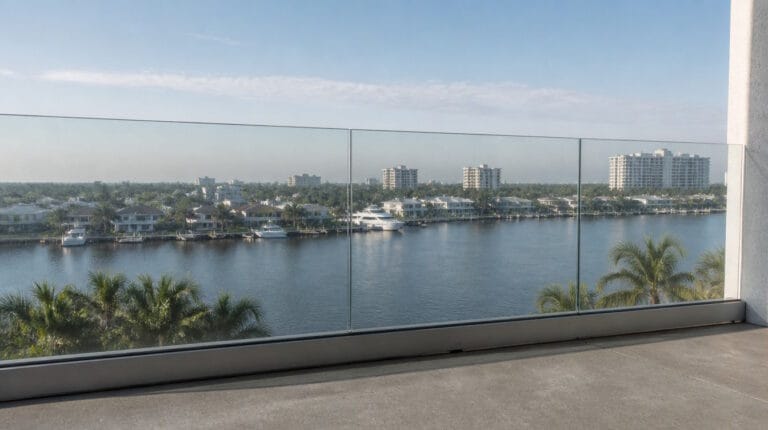
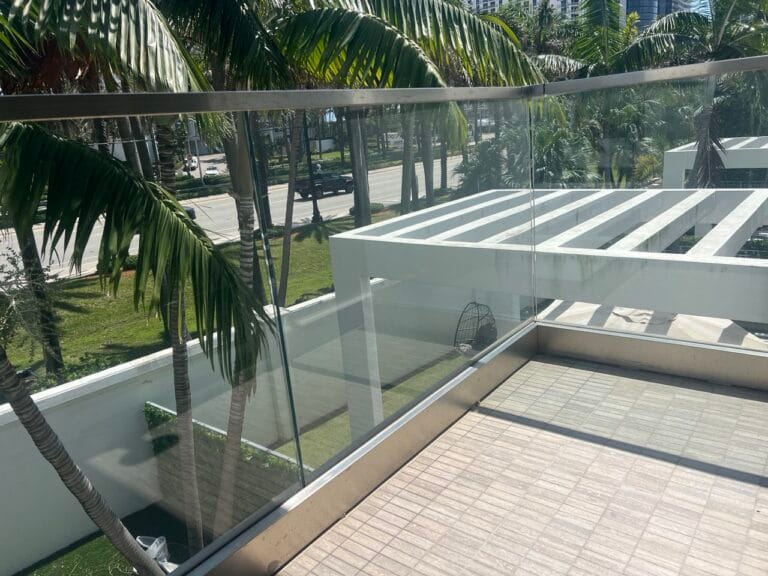
Those are minimums — your city can enforce more in specific situations, and the pool barrier is a separate requirement covered further down. For elevated glass guards, see how the systems are built on our glass balcony railings and glass stair railings pages.
Gaps & Openings: the 4-Inch Sphere Rule
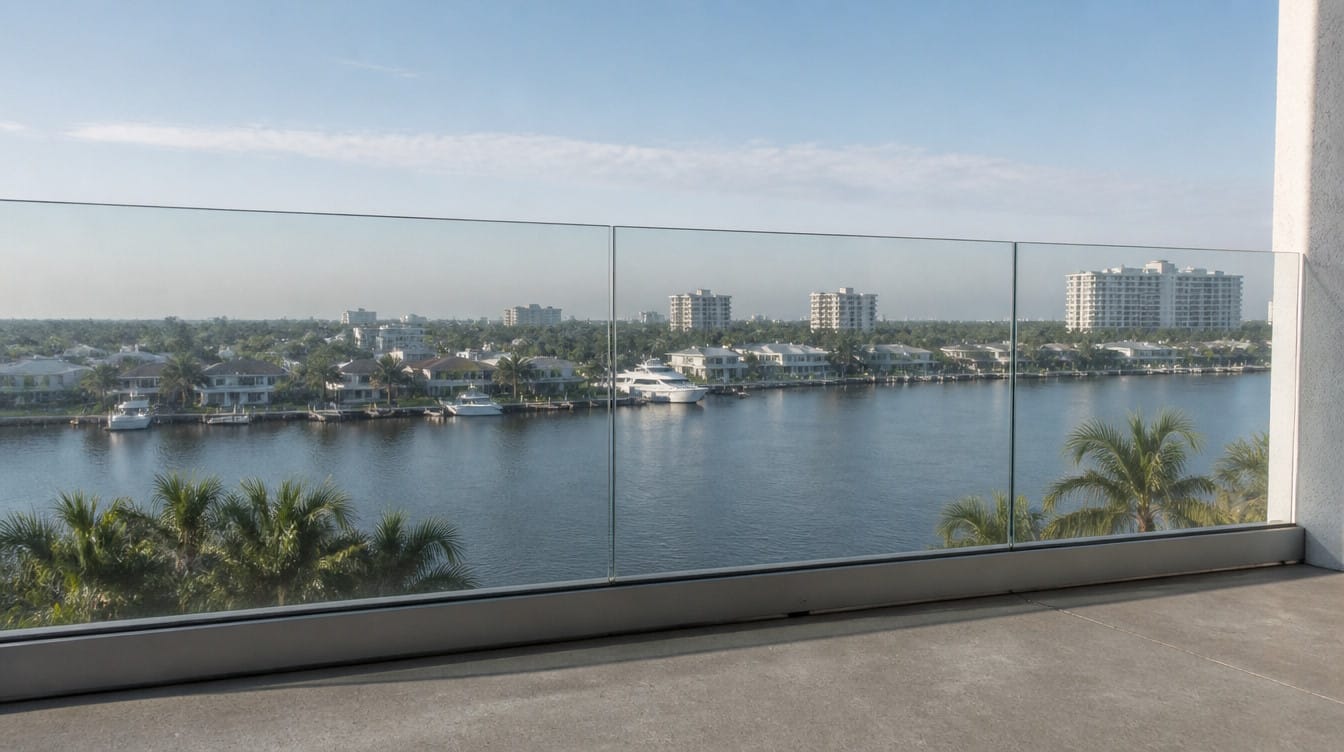
A guard isn’t compliant just because it’s tall enough — the openings in it are regulated too. The core rule: a 4-inch sphere cannot pass through any opening in a guard up to the required height. The intent is simple — a small child shouldn’t be able to slip through or get stuck.
- Open guards: no gap large enough to pass a 4-inch sphere.
- On stairs: the openings may be slightly larger — up to about 4⅜ inches — and the triangular gap formed by the tread, riser, and bottom rail may be up to 6 inches.
- Frameless glass has a built-in advantage here: a solid panel has no gaps to measure, so it clears the opening rule by design — one reason frameless systems pass inspection cleanly.
This is also why cheap, improvised infill fails: it’s the gaps, not the look, that an inspector is measuring.
Handrails on Stairs: Height and Graspability
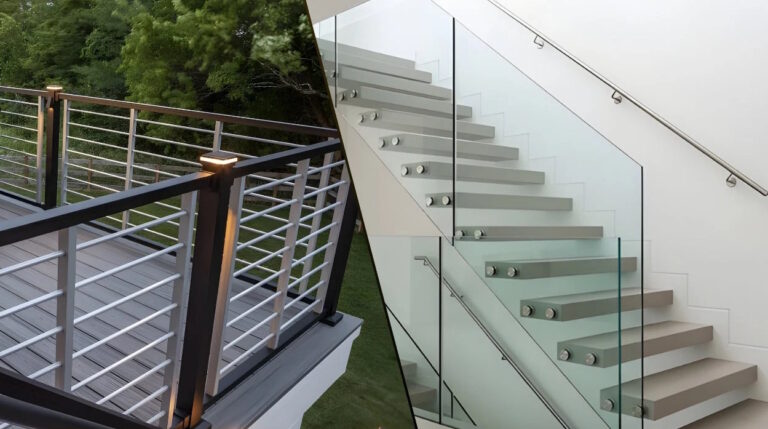
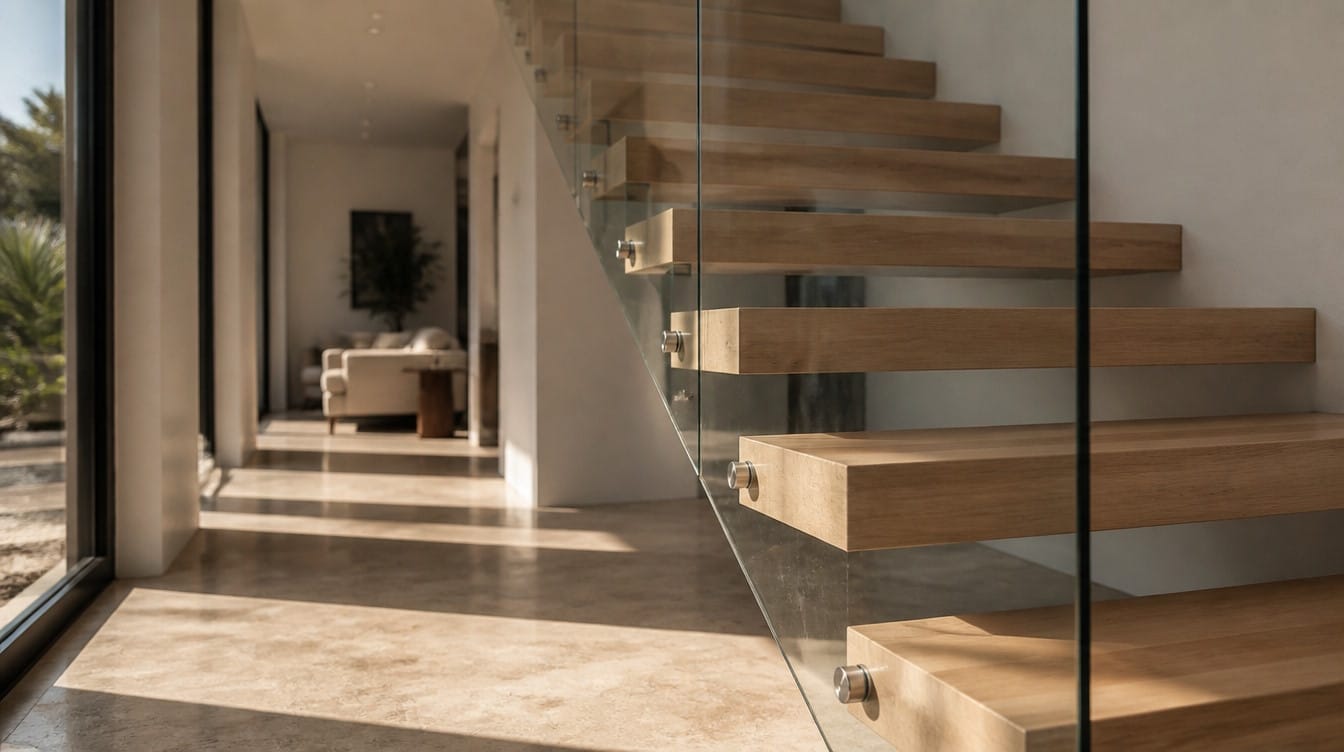
On a staircase, the guard keeps you from falling off the side; the handrail is the graspable rail you actually hold. Code sets it at 34 to 38 inches above the stair nosing, running continuously along the flight, with a shape your hand can close around. A flat glass edge is not a graspable handrail — which is why most glass stair railings pair the panels with a slim stainless or aluminum top rail that satisfies the handrail requirement without hiding the glass.
How Much Weight Must a Railing Hold?
A railing that meets every dimension can still fail if it isn’t built to carry load. The structural requirements are where hardware, glass thickness, and mounting really matter:
- 200-pound concentrated load applied in any direction at the top of the guard or handrail — it has to resist a hard shove or someone falling against it.
- 50 pounds per linear foot applied along the top rail (for commercial and multifamily guards).
- 50 pounds over a one-square-foot area on the infill — the glass panel itself.
Meeting these numbers is about engineering, not just parts: panel thickness, the spacing and type of standoffs or spigots, and how the base is anchored all decide whether the system holds. It’s a big part of why a properly built railing costs what it does — see our glass railing cost guide for the breakdown.
Glass Type: Safety Glazing Is Mandatory
Railing glass is a code-defined “hazardous location,” so ordinary glass isn’t allowed. Florida requires safety glazing — tempered, laminated, or laminated-tempered glass — permanently etched with a certification mark. Two points decide which you need:
- Tempered glass is heat-treated to be far stronger and to break into small, blunt pieces instead of shards.
- Laminated glass bonds layers with an interlayer so that, even if it cracks, the panel stays in place rather than falling out.
- Where the glass itself is the guard (no continuous top rail), code calls for laminated glass or a top rail so a single cracked panel can never leave an open fall hazard. Near pools and on elevated exterior guards, laminated is the common spec for exactly that reason.
Coastal Wind Load & the HVHZ
This is the requirement that catches out-of-state products and DIY installs. Any exterior railing in South Florida has to resist hurricane wind loads, and two of our three counties sit in the High-Velocity Hurricane Zone (HVHZ), where the bar is higher still.
| County | Wind zone | What the code adds |
|---|---|---|
| Palm Beach (Boca Raton, West Palm Beach) | Standard Florida wind-load | Florida Product Approval and wind-load engineering for exterior glass |
| Broward (Fort Lauderdale, Pompano Beach) | HVHZ | Stricter product approvals and wind-pressure engineering |
| Miami-Dade | HVHZ | Miami-Dade NOA (Notice of Acceptance) product approval — among the strictest in the U.S. |
In practice this means an exterior glass railing or pool fence has to be engineered for the design wind pressure at your site and, in the HVHZ, built from approved products. A system that’s perfectly legal in one county can be rejected in another — which is why we confirm the requirements for your specific city before anything is fabricated.

Glass Pool Fences Follow a Separate Code
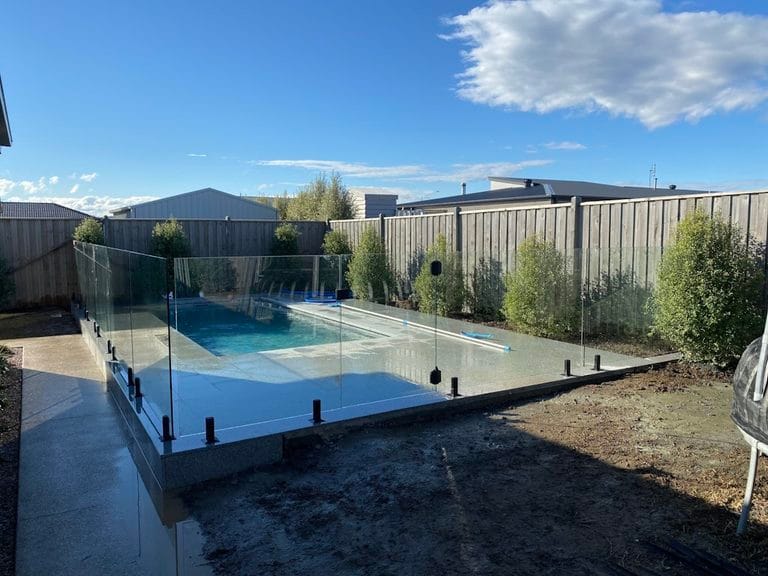
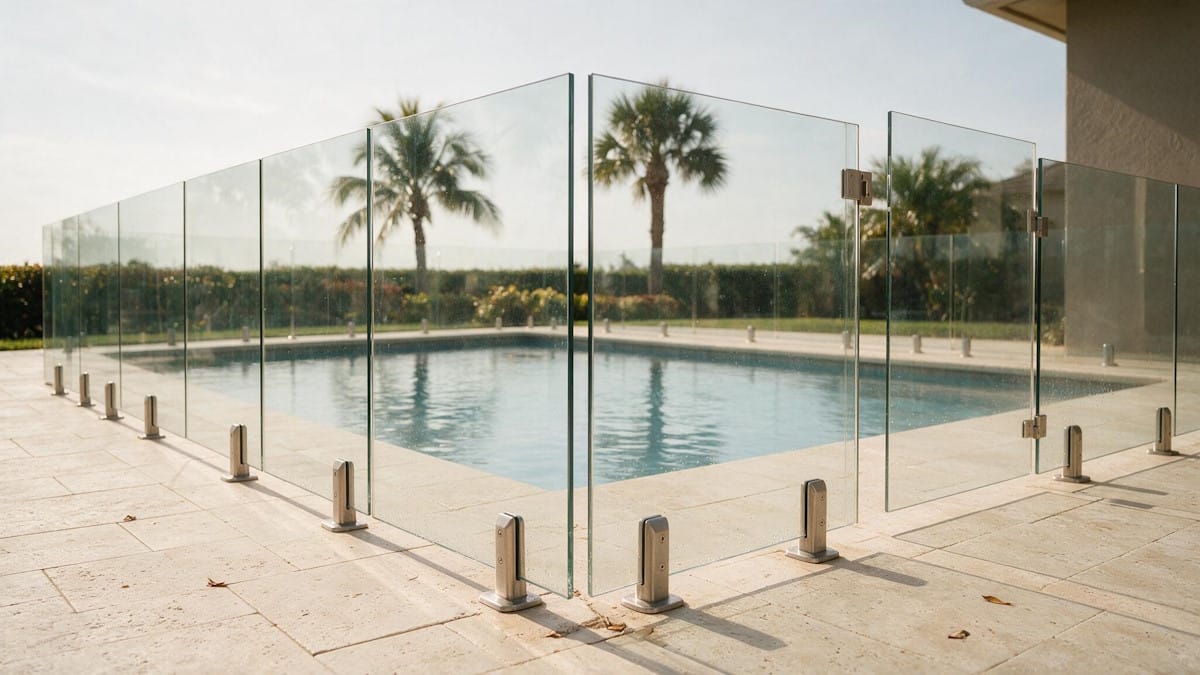
A glass pool fence isn’t a guardrail — it’s a child-safety barrier, governed by Florida’s Residential Swimming Pool Safety Act. The headline numbers are different: a minimum 48-inch barrier height, no opening that passes a 4-inch sphere, no footholds a child could climb, and self-closing, self-latching gates. Because it’s a regulated safety structure, it’s inspected closely.
We cover the pool-barrier rules in depth in does a glass pool fence meet Florida code?, and the systems themselves on our glass pool fence page. For stainless pool-side handrails and grab rails, see pool railings.
How to Make Sure Your Railing Is Code-Compliant
The code is detailed, but staying on the right side of it comes down to a few decisions:
- Use safety glazing (tempered or laminated) sized and engineered for the 200-pound and infill loads — not a thinner panel chosen to cut cost.
- Hit the right height and opening limits for the application: 36 or 42 inches for guards, 34–38 inches for handrails, 48 inches for a pool barrier.
- For anything exterior, use wind-load engineering — and in Broward or Miami-Dade, approved HVHZ products.
- Pull the permit and pass inspection. Most exterior railings and every pool barrier require one; see do you need a permit for a railing or glass pool fence?
- Work with an installer who builds to your city’s code every week, so the inspection is a formality rather than a redo.
Aluminum systems follow the same guard, load, and wind rules — see aluminum railings if you want a framed alternative to glass.
Frequently Asked Questions
How tall does a glass railing have to be in Florida?
A residential guard must be at least 36 inches, and a commercial or multifamily guard at least 42 inches, measured from the walking surface to the top. Stair handrails sit 34 to 38 inches above the nosing, and a residential pool barrier must be at least 48 inches.
What size gap is allowed in a glass railing?
A 4-inch sphere cannot pass through any opening in a guard. On stairs the limit is slightly larger — about 4⅜ inches, with up to 6 inches in the triangle at the bottom step. A solid frameless glass panel has no gaps, so it clears this rule by design.
Does Florida require tempered or laminated glass for railings?
Yes — railing glass must be safety glazing, meaning tempered, laminated, or laminated-tempered. Where the glass itself acts as the guard without a top rail, code calls for laminated glass or a top rail so a single cracked panel can’t create an open fall hazard.
How much weight does a Florida railing have to withstand?
Guards and handrails must resist a 200-pound concentrated load applied in any direction at the top, plus 50 pounds per linear foot along the top rail for commercial and multifamily guards, and 50 pounds over a one-square-foot area on the infill panel.
Do glass railings need to be wind- or hurricane-rated in South Florida?
Yes. Exterior railings must be engineered for hurricane wind loads. Broward and Miami-Dade are in the High-Velocity Hurricane Zone and require approved products — Miami-Dade requires a Notice of Acceptance (NOA) — while Palm Beach uses Florida Product Approval with standard wind-load engineering.
Is a glass pool fence held to the same code as a railing?
No. A glass pool fence is a child-safety barrier under Florida’s Residential Swimming Pool Safety Act, with its own rules: a minimum 48-inch height, no 4-inch gaps, no footholds, and self-closing, self-latching gates — separate from the guardrail requirements.
Build to Florida Code the First Time
Safe Railing designs, fabricates, and installs frameless glass and aluminum railings and glass pool fences across Boca Raton, West Palm Beach, Pompano Beach, and surrounding South Florida communities — engineered to the height, load, glass, and wind requirements your municipality enforces. We handle the engineering, permitting, and inspection so your railing passes the first time. Tell us about your project for a free on-site consultation and an honest quote.