Glass vs Aluminum Railings in Florida: Which Should You Choose?
Choosing between glass and aluminum railings looks like a style decision. In South Florida, it’s really a performance decision. The salt air, the sun, the hurricane season, and the state’s building and pool codes all push on that choice in ways a homeowner in Ohio never has to think about.
Both materials are excellent. Both last decades when they’re installed properly. But “which is better” has a different answer on a Boca Raton waterfront balcony than it does on an inland patio — and the wrong choice costs you either money up front or headaches down the line. Here’s the honest, local breakdown.
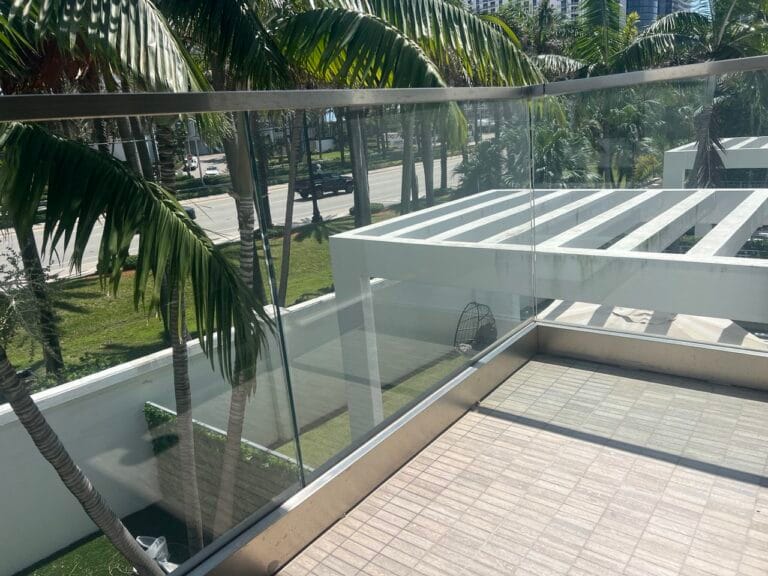
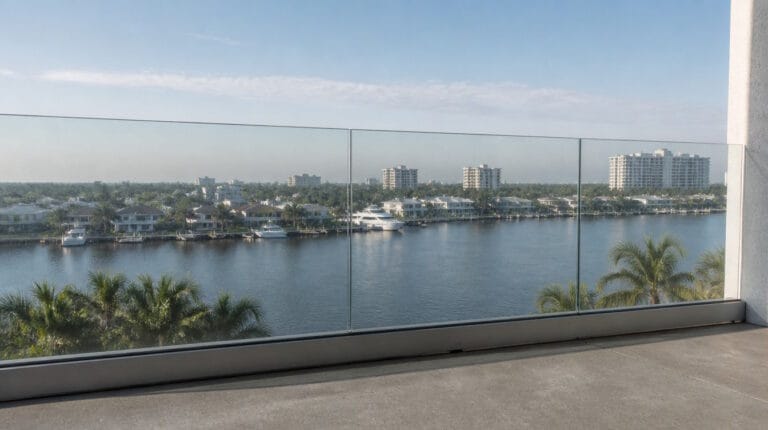
If your priority is the view and a high-end look — waterfront homes, balconies, pool areas, modern architecture — frameless glass is almost always the right call.
If your priority is budget, low maintenance, and durability in the harshest coastal exposure, powder-coated aluminum is hard to beat.
Many South Florida homes end up using both: glass where the view matters, aluminum where it doesn’t. The rest of this guide explains why.

Glass railings — especially frameless glass systems — are built for one thing above all: keeping your sightline completely open. On a property where you paid for the water, the sunset, or the pool view, that’s the whole point.
Where glass wins:
- Unobstructed views. No posts, no pickets, nothing between you and the view. This is the single biggest reason South Florida homeowners choose it.
- High-end, modern look. Frameless glass reads as luxury and tends to add resale appeal on premium properties.
- Strength. Tempered safety glass is roughly four to five times stronger than ordinary glass and is engineered to hold up to impact and load.
- Low corrosion risk on the glass itself. Glass doesn’t rust — though the hardware holding it absolutely can, which is where material quality matters (more on that below).
Where glass costs you:
- Higher upfront price. Glass generally costs more to fabricate and install than aluminum.
- Cleaning. Glass shows everything — salt film, water spots, fingerprints. Near the ocean it needs a regular fresh-water rinse to stay clear. It’s minutes of work, but it’s ongoing.
- Hardware is the weak point in coastal air. The glass survives; cheap spigots and clamps don’t. In salt air, standard-grade stainless can pit within a few seasons, so marine-grade hardware isn’t optional here — it’s the difference between a railing that looks good in ten years and one that stains in two.
Aluminum railings are the practical workhorse of coastal railing — and in Florida, “practical” carries real weight.
Where aluminum wins:
- Corrosion resistance. Aluminum forms a natural oxide layer that resists rust, and a quality powder-coated finish adds another barrier against humidity, UV, and salt. For direct coastal exposure, this is a genuine advantage.
- Low maintenance. A quick hose rinse usually keeps it looking new. No sanding, sealing, or constant wiping.
- Budget-friendly. Generally more affordable than glass, both to install and to maintain.
- Longevity. Powder-coated aluminum railings commonly last 20 to 50 years.
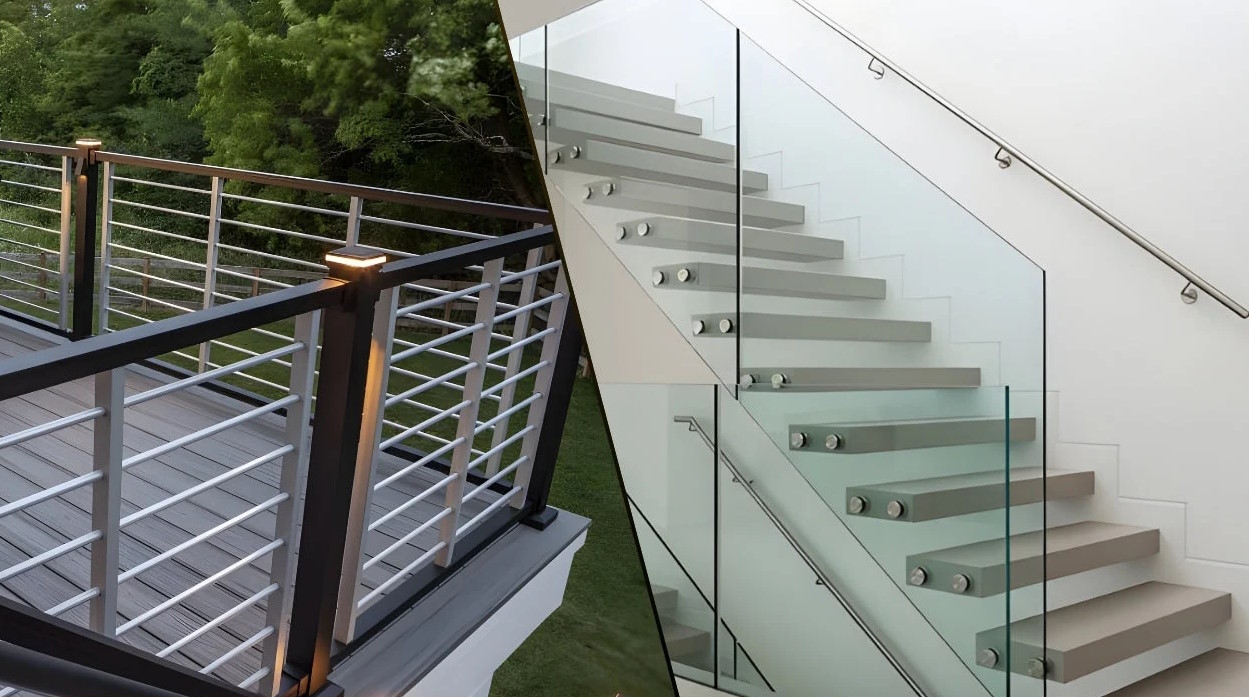
- Style range. Comes in many finishes, including black and wood-look, so it doesn’t have to look industrial.
Where aluminum costs you:
- It blocks part of the view. Even slim pickets interrupt the sightline in a way frameless glass never does.
- Finish damage matters. If the powder coating is scratched or chipped and left unaddressed, corrosion can start at that point. It’s rare and preventable, but it’s the thing to watch.

| Factor | Glass Railings | Aluminum Railings |
| View | Completely open | Partially obstructed |
| Look | High-end, modern | Clean, versatile |
| Upfront cost | Higher | Lower |
| Maintenance | Regular cleaning | Occasional rinse |
| Coastal corrosion | Glass fine; hardware must be marine-grade | Excellent |
| Lifespan | Decades | 20–50 years |
| Best for | Views, balconies, pools, luxury | Budget, low upkeep, harsh exposure |
This is where a national “glass vs aluminum” article stops being useful. In South Florida, four local factors decide the outcome more than personal taste does.
The closer you are to the Atlantic or the Intracoastal, the harder the environment is on metal. This is the one place aluminum has a clear structural edge — but it doesn’t disqualify glass. Glass railings work beautifully on the coast as long as the hardware is marine-grade stainless. The mistake we see is a gorgeous glass railing installed with builder-grade fittings that stain and weep rust within a couple of years. If you go glass near the water, the hardware spec matters as much as the glass. If you want the absolute lowest-maintenance metal in salt air, aluminum is the safer default. See our railing maintenance guide for how coastal exposure affects both.
Exterior railings in Florida aren’t just guardrails — they’re subject to wind-load requirements, and Broward and Miami-Dade fall within the High-Velocity Hurricane Zone (HVHZ) with stricter standards again. Palm Beach County sits outside the HVHZ, so a railing in Boca Raton or Delray Beach is engineered to standard Florida wind-load rather than to Miami-Dade product approvals — one of the few places where a county line genuinely changes what you can put on a balcony. Both glass and aluminum can be engineered to meet these requirements, but the specification is not a formality. Glass thickness, fixing method, and post spacing all change based on the exposure at your property. This is a major reason exterior railing on the coast should be spec’d by someone who installs to Florida code every day, not pulled off a shelf.
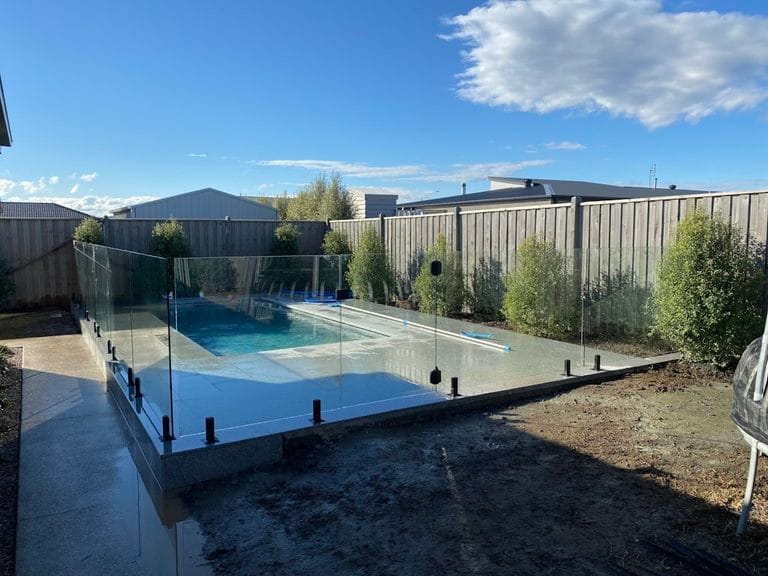
If the railing is going around a pool, the conversation changes entirely. A pool barrier is regulated by Florida’s Residential Swimming Pool Safety Act and has its own rules — height, gaps, and self-closing gates — and a standard deck railing does not automatically qualify. For pools, frameless glass is often the ideal barrier: there’s nothing for a child to climb, and it keeps the water in full view for supervision. If a pool is part of your project, read our dedicated glass pool fence page — the requirements there are stricter than for ordinary railings.
Two smaller but real Florida factors: glass can reflect heat and glare in strong midday sun, and it shows salt and water spots faster near the coast. Neither is a dealbreaker, but if constant cleaning would bother you, it’s an honest point in aluminum’s favor.
Instead of a generic verdict, match the material to your situation:
- Waterfront home, balcony, or a view you want to protect → glass. Nothing else preserves the sightline.
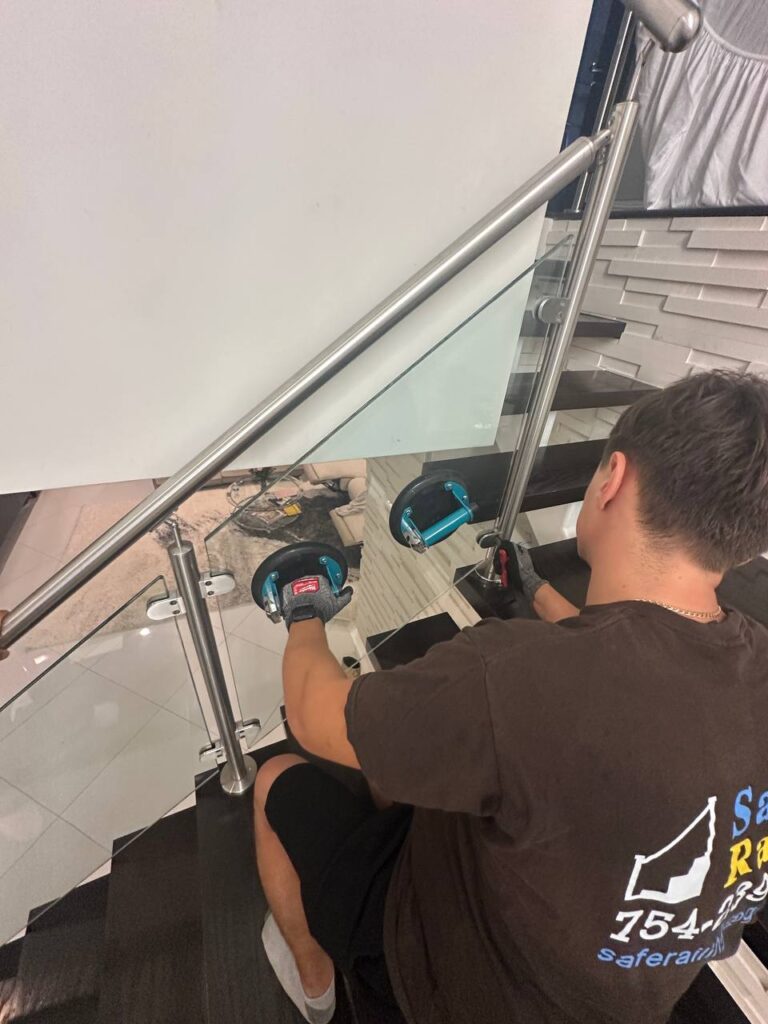
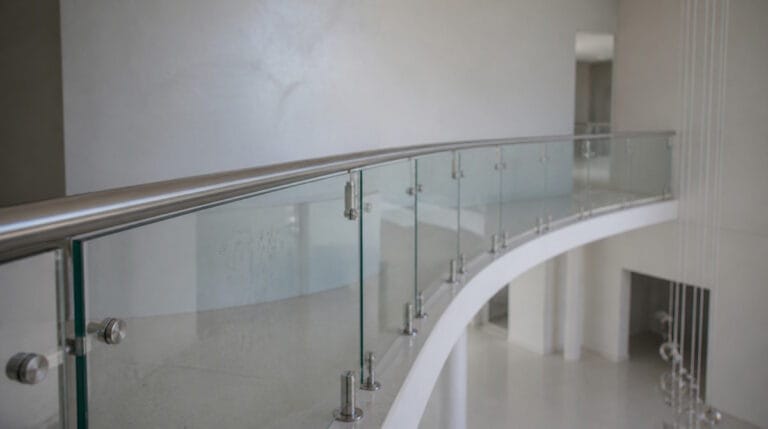
- Staircase where you want a light, open, modern feel → glass stair railings.
- Pool enclosure → glass pool fence, spec’d to code.
- Budget-conscious, low-maintenance, or heavy salt exposure → aluminum.
- Inland patio or a functional railing where the view isn’t the priority → aluminum.
- A large property with mixed needs → use both. Glass on the view-facing side, aluminum where it’s practical, with matched hardware finishes so it reads as one cohesive system.
Pricing depends on length, system type, glass thickness, finish, and site conditions, so treat these as general ranges, not quotes:
- Aluminum is generally the more affordable option per linear foot, installed.
- Glass runs higher — frameless glass pool fencing, for example, commonly lands around 100 – 200 per linear foot installed in Florida, with railings varying by system.
The bigger cost lesson in Florida isn’t the material — it’s doing it right the first time. A railing that fails inspection, or hardware that corrodes because it was under-spec’d for the coast, costs far more to redo than it saved. Get a real on-site measurement and a written quote before comparing prices.
Is glass or aluminum better for coastal Florida homes?
Both work. Aluminum has the edge in the harshest salt exposure because it’s lower maintenance and naturally corrosion-resistant. Glass performs just as well on the coast if it’s installed with marine-grade stainless hardware — the glass never rusts, but cheap fittings do.
Do glass railings shatter easily?
No. Railing glass is tempered safety glass, several times stronger than ordinary glass, and designed to break into small blunt pieces rather than sharp shards if it ever fails. It’s engineered and installed to meet safety codes.
Which railing needs less maintenance?
Aluminum. A rinse usually does it. Glass needs more regular cleaning to stay spot-free, especially near the ocean.
Can I use both glass and aluminum on the same property?
Yes, and many South Florida homes do — glass where the view matters, aluminum where it doesn’t. Matching the hardware finishes keeps the whole property looking consistent.
Do exterior railings in Florida need to meet hurricane codes?
Yes. Exterior railings are subject to wind-load requirements, with stricter HVHZ standards in Broward and Miami-Dade. Both materials can be engineered to comply when spec’d correctly.
There’s no universal winner — there’s a right answer for your property. Glass buys you the view and the high-end look; aluminum buys you low maintenance and value in tough coastal conditions. In Florida, the material matters less than getting it spec’d for salt air, engineered to code, and installed properly.
Safe Railing designs, fabricates, and installs both glass and aluminum railing systems across Boca Raton and South Florida. If you’re weighing the two for your home, contact us for a free on-site consultation — we’ll look at your property, your exposure, and your budget, and give you an honest recommendation.